

These traditional Romanian fried doughnuts, papanasi, are made with cottage cheese and served with smetana and blueberry jam.
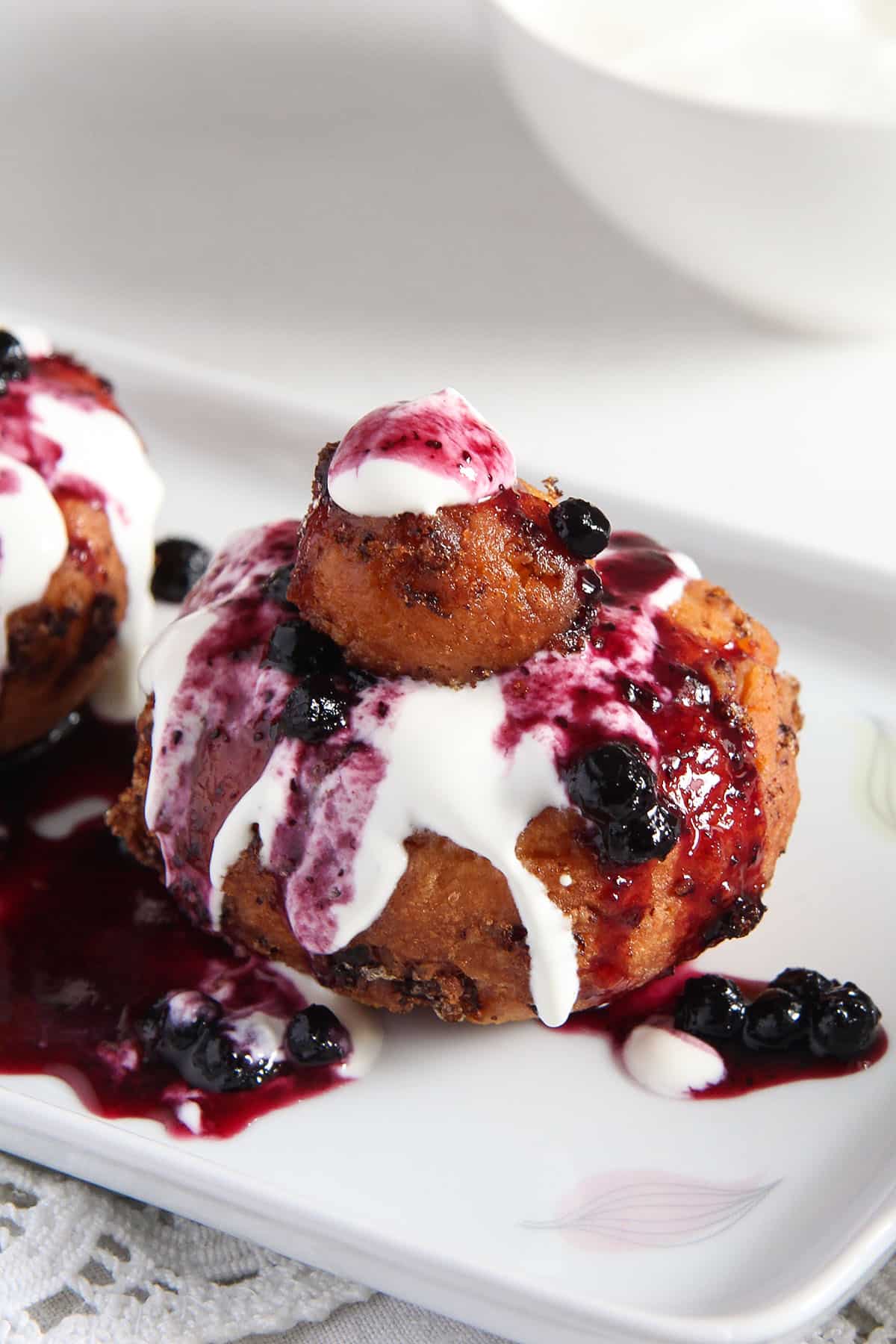
These papanasi or Romanian fried doughnuts are the best doughnuts ever! Soft yet crunchy, oozing with sour cream and blueberry jam, every bite is a complete delight. No wonder they are one of the most popular Romanian desserts.
I don't often make doughnuts myself, but when I crave them, I make this papanasi recipe (pronounced papanash); it is so good! And I sometimes make the boiled ones - papanasi fierti.
There is no yeast in this recipe, so you don't have to wait for the dough to rise. You do need to allow time for draining the cottage cheese.
Featured comment:
Maureen: "Just got done making it. Followed the directions to the letter and it turned out perfect !! Thank you and my neighbor, thank you! (she is from Romania and I just met her in our apartment building ...thought we would give her a taste of home)."
Ingredients: 10 | Draining time: 40-60 minutes | Prep Time: 30 minutes | Cook Time: 30 minutes | Servings: 8 | Difficulty: Medium
Jump to recipe
What are papanasi?
They are a typical Romanian dessert, basically doughnuts made with cottage cheese. You can fry them like in this recipe or boil them and serve them coated with sugared breadcrumbs.
Fried papanasi are a dessert you will probably find in every traditional Romanian restaurant. If you try them once, you will remember them for the rest of your life, and you will probably look for a papanasi recipe and try to make them yourself at home. They are that good!
The cheese is mixed into the dough, rather than used as a filling. Each doughnut ring is topped with a small fried dough ball, sour cream, and jam.
Recipe ingredients
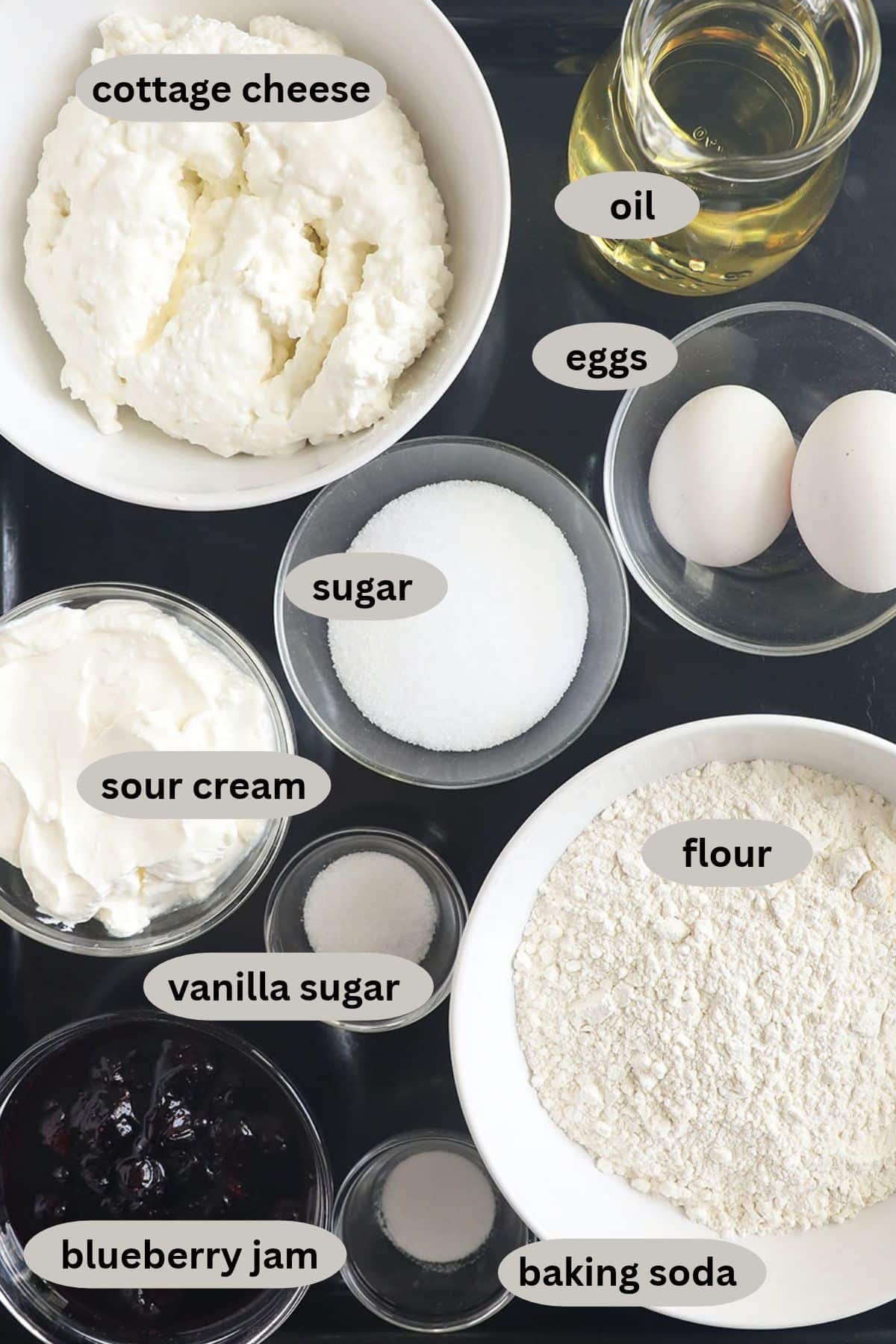
Cheese: Papanasi are traditionally made with Romanian brânză de vaci, a fresh cow's milk cheese with a mild taste. It is usually drier than the cottage cheese I buy in Germany.
- My cousin Georgiana suggested using cottage cheese instead, and it worked great, though I had to adjust the flour amount. She warned me that the dough would be soft and sticky, but I found the German cottage cheese too watery compared to brânză de vaci. After realizing this, I added just enough flour to make the dough workable, and the papanasi turned out wonderfully.
Flour: Use all-purpose flour. Keep a little of the measured flour aside and add it only if the dough is too sticky to shape. The amount needed depends on how wet the cottage cheese is. I recommend using a kitchen scale, especially for the flour.
Eggs, sugar, and flavorings: You will need two large eggs, granulated sugar, and vanilla sugar. You can replace the vanilla sugar with a little vanilla extract.
- The rum aroma is optional. It is a concentrated rum flavoring sold in small bottles in the baking aisle. If you don't have it, leave it out.
Baking soda: This recipe uses baking soda, not yeast.
Smetana: In Romania, sour cream is called smântână. I usually buy the German version, Schmand, with 20% fat, or smetana from the Russian store, which is closer to the Romanian version. If you can't find it, crème fraîche or full-fat sour cream is perfectly fine.
Blueberry jam: Use a runny jam, preferably with whole berries or pieces of fruit. Romanian whole-fruit preserves are called dulceață. A thicker jam will still taste good, but it won't slide down the sides of the papanasi in the same way. When I have it, I serve the papanasi with this amazing Blueberry Sauce.
See the recipe card for the full ingredient list and quantities.
How to make papanasi?
Drain the cottage cheese: Leave it in a fine-mesh sieve for 40-60 minutes, stirring a few times. Pat the top with a paper towel, turn the cheese into a bowl, and pat the other side too.
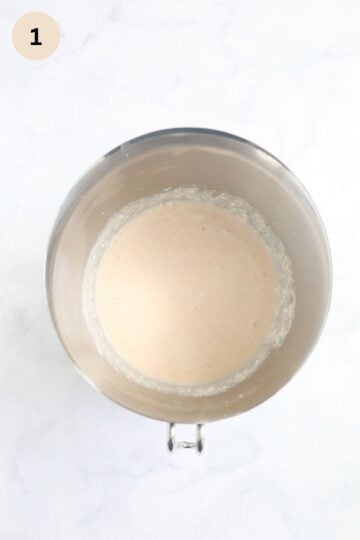
Step #1: Add the eggs, rum aroma, granulated sugar, and vanilla sugar to the cottage cheese. Blend briefly with an immersion blender. The mixture should remain slightly chunky.
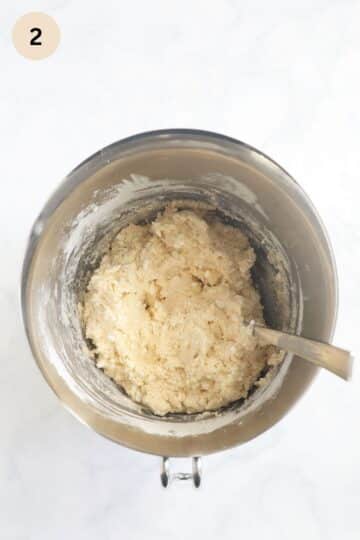
Step #2: Reserve 2½ tablespoons (20 g) of the measured flour. Mix the rest with the baking soda and stir into the cheese mixture.
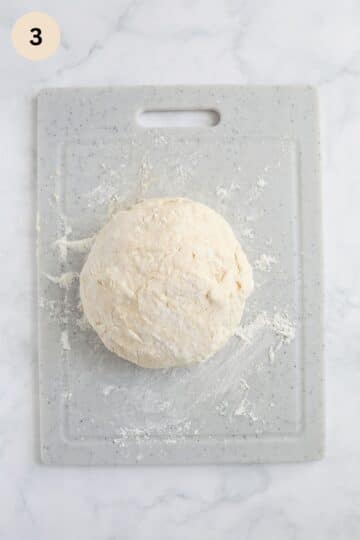
Step #3: Knead lightly on a floured surface with floured hands. The dough should stay slightly sticky; add the reserved flour only if it's too sticky to shape.
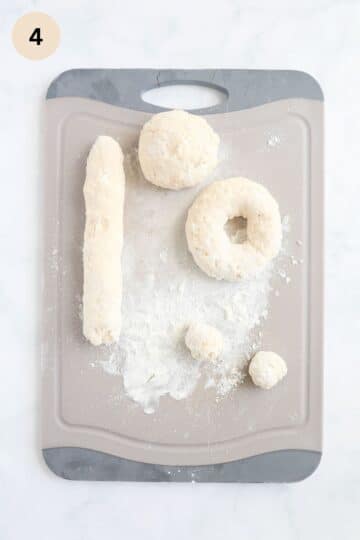
Step #4: Divide the dough into 9 equal portions. Reserve one for the 8 small topping balls. With floured hands, roll each remaining portion into a 7-inch/18 cm rope and press the ends together to form a ring.
Tip: I shape only two at a time to fit my pot; left waiting on the board, they stick and need reshaping.
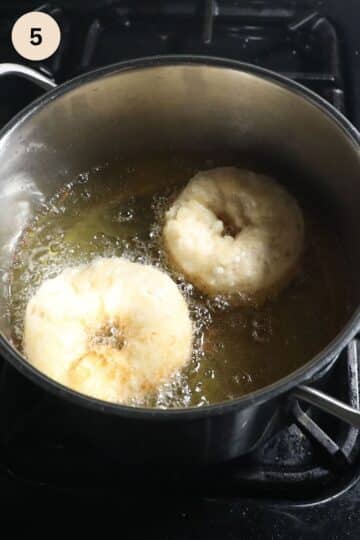
Step #5: Heat enough oil in a deep pot for the papanasi to swim freely.
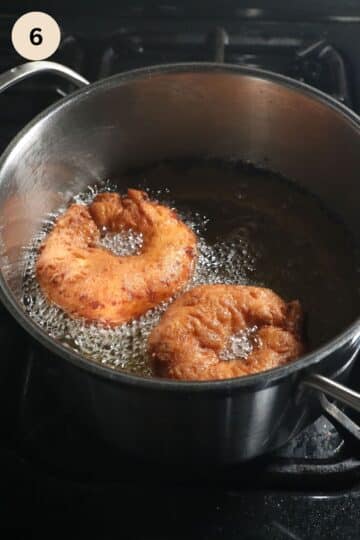
Step #6: Fry over medium-low heat for about 3-4 minutes, turning with a slotted spoon, until golden and cooked through.
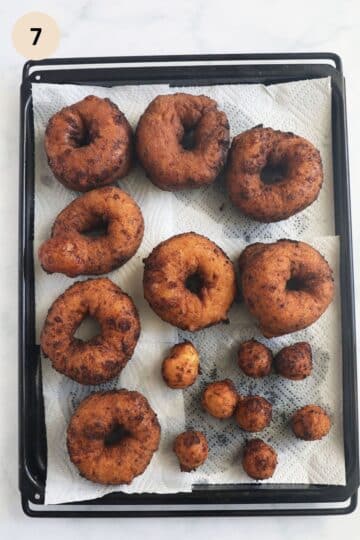
Step #7: Drain on paper towels. Repeat, shaping each pair just before frying. Shape the reserved dough into 8 small balls and fry separately for about 2 minutes.
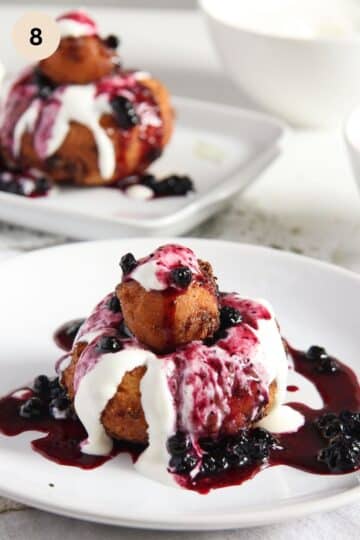
Step #8: Spoon the smetana and jam over each ring, place the little ball on top, and add a little more of both.
Tips
Drain the cottage cheese well before using it. I leave it in a sieve for 40-60 minutes, stirring a few times, then gently pat it dry with paper towels on both sides. The dough will still be slightly sticky; don't try to make it completely dry by adding more flour.
Don't add too much flour. The dough should be soft and slightly sticky. Flour your hands and the board to make shaping easier. Adding flour until the dough no longer sticks at all can make the papanasi heavy.
If the outside browns before the center cooks, reduce the heat and fry the next batch a little longer. The cooking time depends on the thickness of the doughnuts and the oil temperature.
Don't overcrowd the pot. My medium-sized pot fits two papanasi at a time. If you use a larger pot to fry three at once, you will need more oil.
How to serve them?
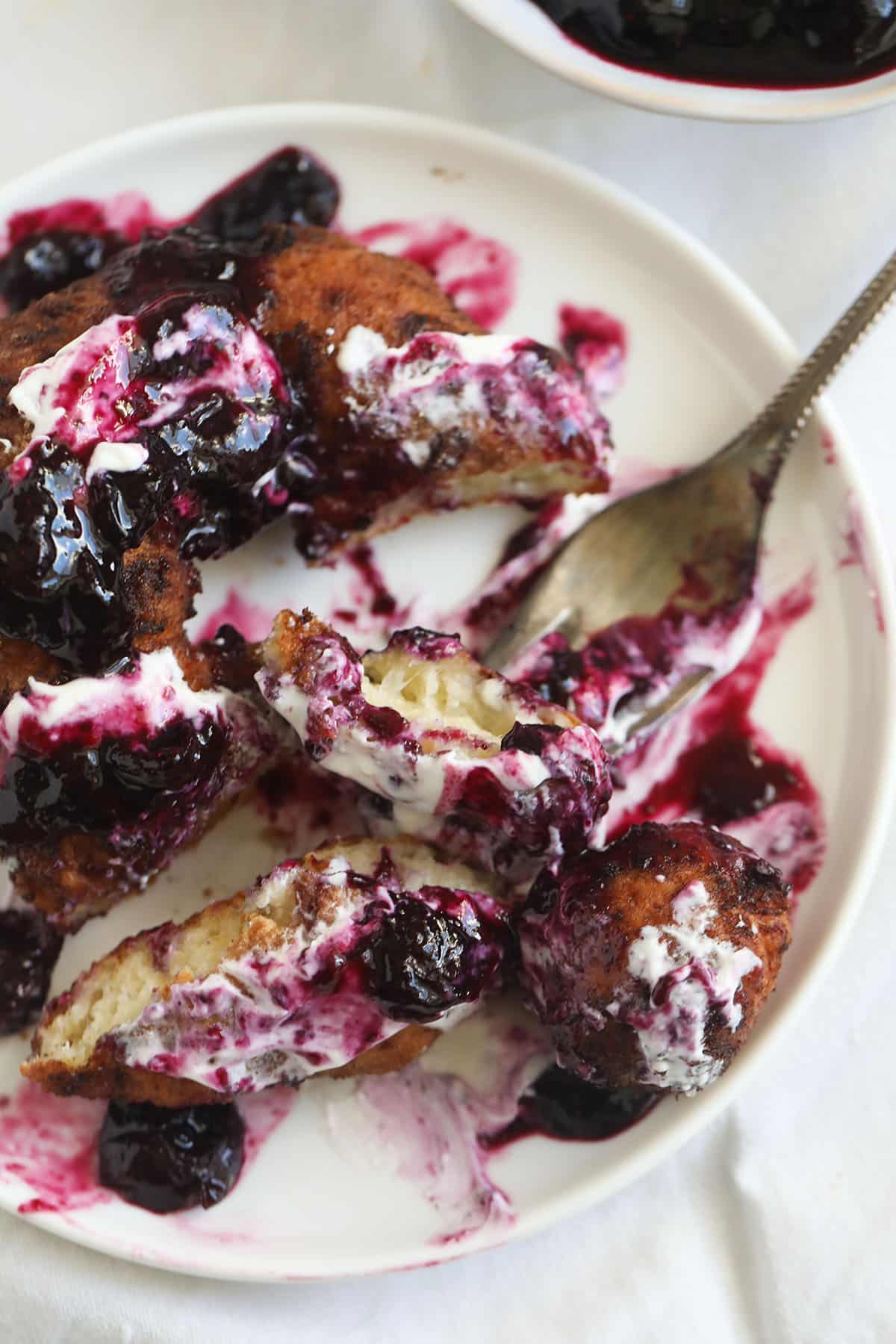
They are best served immediately while still warm, and they would not be papanasi without smetana and a runny, sweet blueberry jam.
Papanasi are usually served with blueberry jam, but other jams work well too - sour cherry, blackberry, or black currant freezer jam are great. I often serve them with this Blueberry Sauce. The jam should slide down the sides of the papanasi and create little pools on the plate. Yummm!
Have the toppings and plates ready before you start frying, and add the cream and jam just before serving.
Can I make papanasi ahead?
They are best freshly fried. You can measure the dry ingredients and have the cream, jam, and plates ready beforehand. Allow another 40-60 minutes for draining the cottage cheese.
For guests, plan to fry them close to serving time. Don't shape all the rings ahead and leave them on the board; the dough can stick while waiting.
How to store?
If you have leftovers, keep the doughnuts separate from the sour cream and jam. Refrigerate them in an airtight container.
I don't reheat the leftovers; we eat them as they are.


Romanian Doughnuts - Papanasi Recipe
Equipment
- Fine mesh sieve
- Pot for frying
- Paper towels
Ingredients
Papanasi:
- 2¼ cups + 1 tablespoon cottage cheese 1.1 lbs, Note 1
- 2 large eggs
- a few drops of rum aroma optional
- ⅓ cup + 1 tablespoon granulated sugar
- 1 tablespoon vanilla sugar or a little vanilla extract
- 2 cups all-purpose flour plus extra for shaping
- 1 teaspoon baking soda
- about 4 cups vegetable oil for deep-frying, Note 2
To serve:
- 1 cup smetana sour cream or creme fraiche
- 8 tablespoons runny blueberry jam with whole berries more if desired, Note 3
Instructions
- Drain cottage cheese: Place the cottage cheese in a sieve and let it drain for 40-60 minutes, stirring a few times. Gently pat the top with a paper towel, then turn the cheese into a mixing bowl and gently pat the other side dry.2¼ cups + 1 tablespoon cottage cheese
- Blend: Add the eggs, rum aroma (if using), granulated sugar, and vanilla sugar to the cheese. Blend briefly with an immersion blender until combined but still slightly chunky.2 large eggs + a few drops of rum aroma + ⅓ cup + 1 tablespoon granulated sugar + 1 tablespoon vanilla sugar
- Make the dough: Measure the flour, then remove 2½ tablespoons (20 g) and set aside (Note 4). Mix the remaining flour (230 g) with the baking soda and stir it into the cheese mixture with a spoon. Generously flour your work surface and hands. Turn out the dough and knead lightly, just until it comes together. The dough should be soft and slightly sticky but manageable. Add the reserved flour, a tablespoon at a time, only if the dough is too sticky to shape.2 cups all-purpose flour + 1 teaspoon baking soda
- Divide the dough into 9 equal portions. Set one portion aside for the 8 small balls that will go on top of the papanasi. Each of the remaining 8 portions will make one doughnut ring.
- Heat the oil: Pour enough vegetable oil into a deep pot to reach a depth of about 4 inches/10 cm, leaving plenty of space above it. Heat the oil. Dip the end of a wooden toothpick into it; when bubbles form around the wood, start frying.about 4 cups vegetable oil
- Shape the papanasi 2 at a time: Generously flour your hands and the work surface. Take one portion of dough and roll it into a thick rope about 7 inches/18 cm long. Bring the ends together and press them firmly to join, forming a ring with a hole in the middle. Repeat with a second portion.
- Shape only two rings at a time, as that is how many fit in my pot. Fry them before shaping the next pair. If you shape all the rings ahead of time, the dough can stick to the board while waiting, and you will have to reshape them.
- Fry the papanasi: Carefully lower the rings into the hot oil. Reduce the heat to medium-low and fry, turning with a slotted spoon, until golden brown and cooked through. Mine took about 3-4 minutes per batch (Note 5). Adjust the heat if they brown too quickly. Transfer to a plate lined with paper towels and repeat with the remaining dough.
- Make the small balls: Divide the reserved dough portion into 8 small balls. Fry without crowding the pot until golden brown and cooked through, about 2 minutes. Transfer to the paper-towel-lined plate.
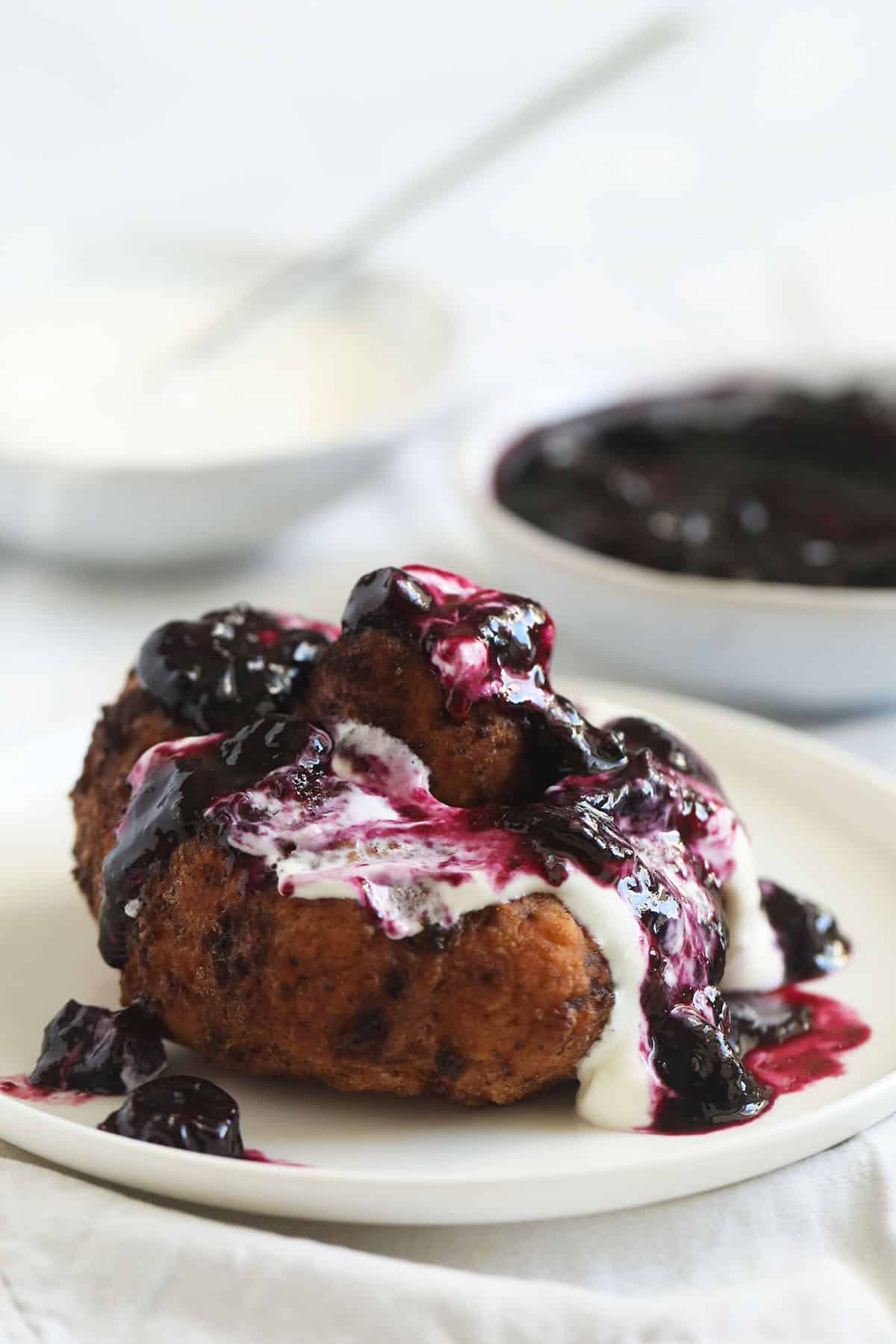
- Serve immediately: Spoon smetana and blueberry jam over each warm ring. Place a small doughnut ball on top and finish with a little more smetana and jam.1 cup smetana + 8 tablespoons runny blueberry jam with whole berries
Notes
- Measurements: Use a digital kitchen scale for the best results.
- The amount of oil depends on the size of your pot. Use enough for the papanasi to swim without touching the bottom. My medium-sized pot fits two at a time. If you use a larger pot to fry three at once, you'll need more oil.
- Jam: Use a loose jam with whole berries or fruit pieces. Sour cherry, blackberry, or black currant jam also work well. You can also top the papanasi with this delicious Blueberry Sauce.
- Flour amount: Reserve 2½ tablespoons (20 g) of the measured flour before making the dough. Add it only if the dough is too sticky to shape. The amount needed depends on how wet the cottage cheese is.
- Frying times depend on the thickness of the doughnuts and the oil temperature.




Renee says
Outstanding flavour and they're super fast to make 🥰
Adina says
I am so happy to hear it, Renee. Thank you so much for the feedback.
cassie says
loved it
Adina says
So glad to hear it, Cassie. Thank you.
Manuela says
Hi Adina,
Brînza de Vaci translates more closely to Farmers Cheese - which can be found pretty much everywhere in the US.
Heather says
Really delicious! I am in the US. The adaptations that I made were that I used full fat small curd cottage cheese and I drained it in a sieve for a couple of hours, then put it on a paper towel. It was pretty dry. Then for the sugar sachet I used 1 T of sugar and 1t vanilla. I mixed the sugar and cottage cheese in my electric mixer first (instead of a blender), then I added the rest. Surprisingly, I did not need as much flour as the recipe called for (I remembered that it should be a bit sticky)! I added the zest of 1 lemon instead of the rum extract. This was so simple and delicious. I cant wait to make it again! Thanks for a great recipe.
Adina says
So happy to hear it.
Ron says
seriously....this recipe needs help for an American audience.
What is rum aroma, how does it differ from flavoring and extract, and if substitutions are OK, what is the amount of the subs?
What is a "cachet" of vanilla sugar?? In cooking a sachet is usually an aromatic made of herbs wrapped in cheesecloth and added to a boiling or simmering liquid. But it is then removed. This recipe calls for the sachet to added to the dry ingredients and blended, suggesting it will remain.
Cottage cheese...I am guessing small curd? Low-moisture? Drained? I can imagine the recipe for a doughnut would want large curd and the liquid cottage cheese is packaged in.
Can you improve this recipe but giving more detailed information?
Adina says
I will try to clarify that, but I definitely think you are overthinking it or not thinking enough about it. Rum flavor/ aroma - if you can't find my product, read the label on your product and use it accordingly; it's the safest way to go about it, as products can differ greatly from one country to another. And when it comes to extracts and stuff, everybody knows you only need a tiny amount. I cannot possibly give substations for everything because I don't know all the products in this world; a bit of self-responsibility should be implicit.
Definition of sachet - the first answer when you google it:
BRITISH
a small sealed bag or packet containing a small quantity of something.
"a sachet of sugar"
So it is a small packet of something and should be more than obvious that, being made of paper, cloth, plastic, or whatever; you just open it and use the contents, and you don't blend the paper into the ingredients. I have never read a recipe stating: the paper bag should be discarded and not be added to the food, everybody knows that already.
A sachet contains about 1 tablespoon of vanilla sugar, if you have just 1/2 of a tablespoon or even 2 instead won't change the recipe much.
The cottage cheese question I can understand; I didn't think to elaborate on that because we only have one kind of cottage cheese around here; it comes in low-fat or full-fat and I use the full-fat version for baking. I suppose it's small curd and rather dry (but I don't have a comparison); there is only a tiny amount of liquid in the container (about 1/2 tablespoon) which I discard. I don't know why you think that large curd with lots of liquid would be the obvious choice, I would think exactly the other way around. If you only have the large curd, drain it, and mash the curd with a fork until it looks a bit like in the images belonging to this recipe.
I hope this helps. Have a nice day.
Bumblebee says
It's not smetana , it's smantana, corect your article
Adina says
No need to correct it, thanks, it's right the way it is.