
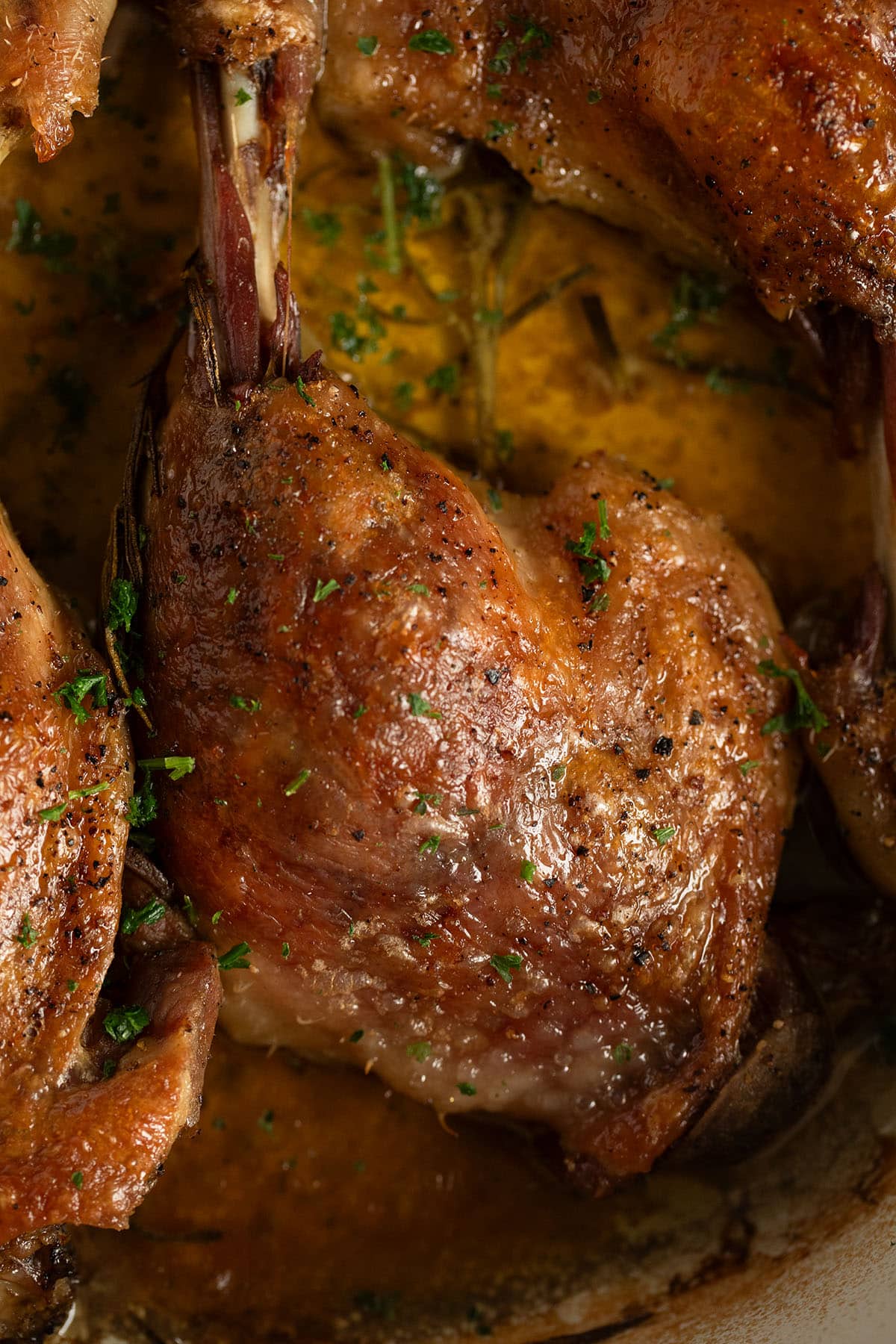
Slow-cooked duck legs that are fall-off-the-bone tender with perfectly crispy skin - easy to make in the oven, no pan-fat rendering needed.
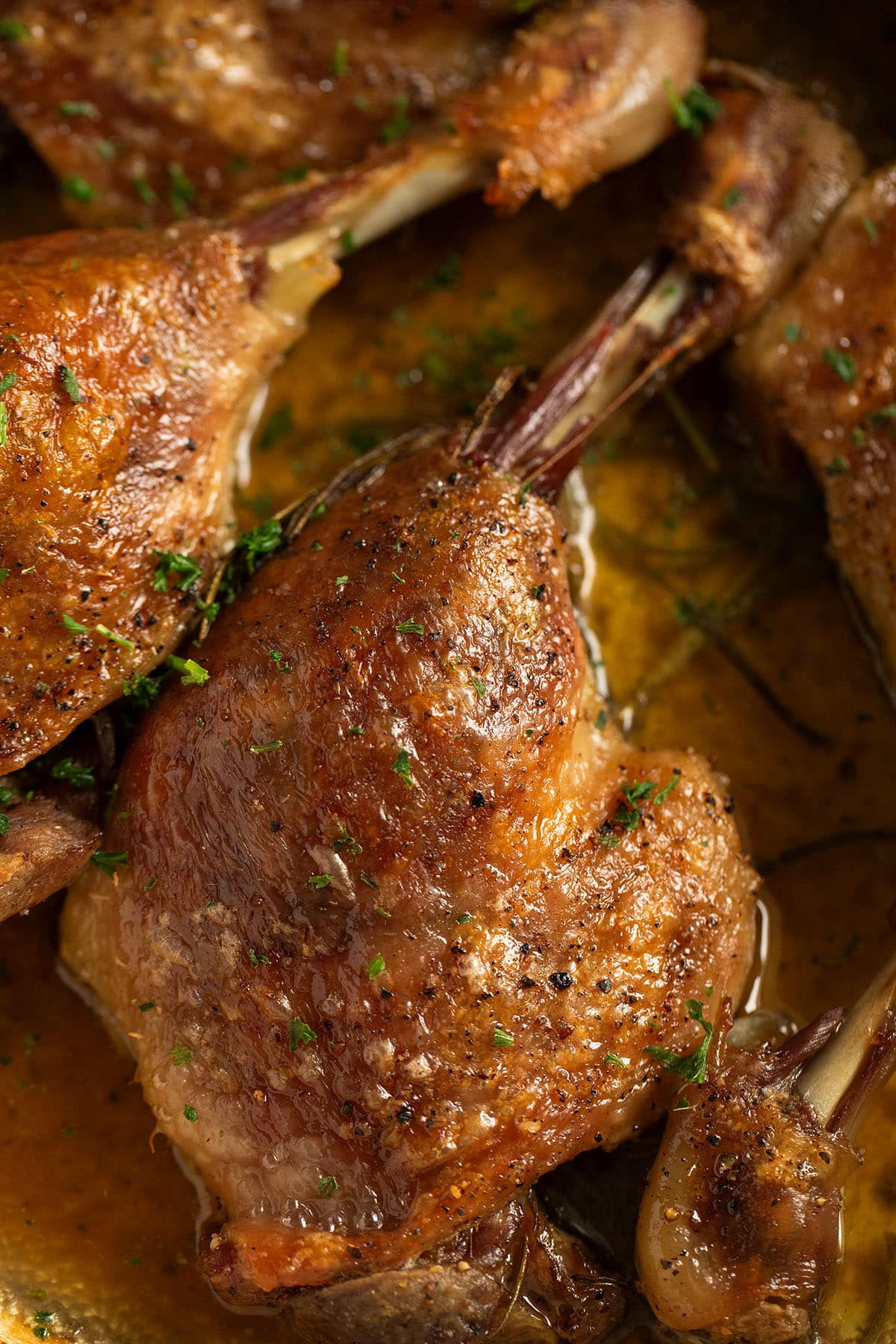
These slow-cooked duck legs turn out incredibly tender, fall-off-the-bone, with skin that crisps beautifully in the oven with almost no effort.
I love how easy they are to make - just season, pop them in the pot, and let the oven do the work. You can go simple with salt and pepper or add garlic and rosemary for a little extra flavor.
If you like duck, how about some classics like Duck in Orange Sauce or Confit de Canard Recipe?
Recipe ingredients
Duck legs: They are usually sold frozen in a double pack weighing about 18-24 oz (500-680 g).
Garlic and rosemary: They add lovely flavor, but the duck legs are delicious even without them. You can use some to make Garlic Rosemary Mashed Potatoes to go with the duck.
- Feel free to add or substitute with onion wedges, other herbs, or even a thickly sliced orange. You are absolutely fine if you only use salt and pepper.
Water: Water works perfectly here because I don't make a sauce from the pan juices - the fat content would make the dish too heavy. Skipping a sauce keeps the legs light and crispy.
- You can serve these slow-roasted duck legs with a sauce made separately. This Orange Sauce for Chicken also goes well with duck legs.
How to slow cook duck legs?
Equipment: I usually use a large, shallow Dutch oven. If you don't have one, any heavy, oven-safe pot with a lid works, or a snug roasting tin covered tightly with foil.
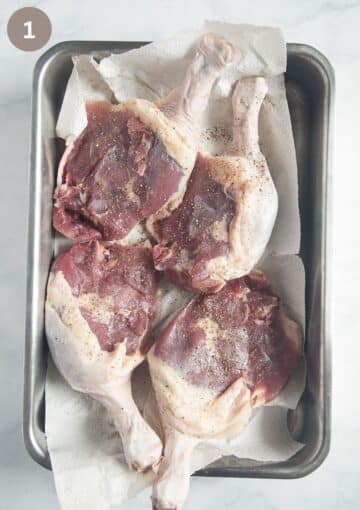
Step #1: Dry the legs with paper towels. Rub generously with about 1-1½ teaspoon salt and ½-¾ teaspoon black pepper for four legs.

Step #2: Place peeled garlic and rosemary in the pot.
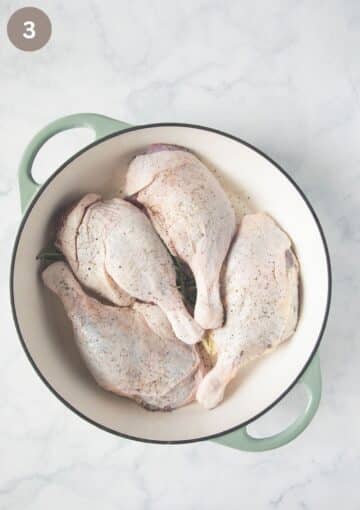
Step #3: Lay the duck legs skin-side up, snug but not overlapping. Pour just enough to cover the bottom.

Step #4: Cover with a lid and bake at 300 °F / 150 °C for 1½ hours.

Step #5: Remove the lid, increase the oven to 360 °F / 180 °C, and roast for another hour until the skin is golden and crispy.

Step #6: Let the legs rest uncovered for 5-10 minutes. The meat is fall-off-the-bone tender, and the skin stays crisp.
You can broil briefly if needed, but I never have to - the skin comes out perfectly without extra work or stove-top mess. Just like in this recipe for Oven Slow-Cooked Turkey Leg.
Tips
Thawing duck legs: Two duck legs (about 18-24 oz / 500-680 g total) typically thaw in 12-24 hours in the fridge, depending on how cold your fridge runs.
- If you're short on time, you can also thaw them in cold water, which usually takes 1-2 hours - just change the water a couple of times.
- Don't use warm water and avoid thawing the legs at room temperature, as that can lead to unsafe bacterial growth.
The water: Just to cover the bottom, so the duck doesn't stick and creates some steam, not to braise fully. Adjust slightly depending on your pot size - the liquid should sit around 0.2 inches/ ½ cm deep, just enough to keep the bottom moist.
What about a sauce? I don't make a sauce from the pan juices here - the duck releases plenty of fat while cooking, and the resulting liquid is mostly fat mixed with water. Skipping a sauce keeps the dish lighter.
- You can serve the slow-cooked duck legs with another sauce, like Plum Sauce for Duck, Canned Cranberry Sauce, hoisin sauce, red wine reduction, or a simple balsamic glaze.
Store and reheat
Leftover duck legs keep well in an airtight container in the fridge for up to 3-4 days.
Freeze for up to 3 months and thaw in the fridge.
Reheat them in the oven at 350°F/175°C for about 15-20 minutes, uncovered, until hot, and the skin crisps up again. You can also reheat them in a skillet, skin side down, on low heat until warm and crisp. Avoid microwaving if you want to keep the skin crispy.





Slow-Cooked Duck Legs with Crispy Skin
Equipment
- Large Dutch oven with a lid Note 1
Ingredients
- 4 duck legs Note 2
- fine sea salt and ground black pepper
- 5 large garlic cloves optional, Note 3
- 3-4 rosemary sprigs optional
- ¾-1 cup hot water Note 4
Instructions
- Thaw the duck legs in the refrigerator - it will take 12-24 hours.
- Preheat the oven to 300°F/ 150°C.
- Season duck legs: Dry the legs with paper towels and rub them generously with salt and pepper on both sides. I use about 1 to 1 ½ teaspoons of fine sea salt and about ½ to ¾ teaspoon of ground black pepper.4 duck legs + fine sea salt and ground black pepper
- Assemble the pot: Place the peeled but left whole garlic cloves and the rosemary sprigs into the pot. Place the duck legs, skin side up, on top. They should fit inside tightly but not overlap.5 large garlic cloves + 3-4 rosemary sprigs
- Boil some water in the kettle. Add just enough water to cover the bottom of the pot - usually about ¾ to 1 cup; the liquid should sit around 0.2 inches/ ½ cm deep. Pour the water around the legs into the pot, not on top of them, or you will wash away the seasoning.¾-1 cup hot water
- Slow-cook the duck legs: Cover the pot with a tight lid and place it in the preheated oven. Cook for 1 ½ hours.
- Remove the lid and increase the oven temperature to 180 °C / 360 °F. Roast the duck legs for another hour, until the skin is beautifully browned and crispy. If you feel the skin isn't quite crisp enough, you can briefly broil the legs for a few minutes - but watch them closely, as the skin can burn quickly. Personally, I never need to use the broiler; the skin turns out perfectly crisp on its own.
- Let the duck legs rest for 5-10 minutes before serving. Rest them uncovered to keep the skin crispy while the juices redistribute, ensuring tender, flavorful meat.
Notes
- The pot: I use a large, shallow Dutch oven, but you can also use any heavy, oven-safe pot with a lid or a snugly fitting roasting tin covered tightly with foil.
- Duck legs are usually sold frozen in a double pack weighing about 18-24 oz (500-680 g), and they thaw best in the refrigerator, typically needing 12-24 hours.
- Garlic and rosemary: They add a wonderful flavor but are optional-you'll enjoy these duck legs with or without them. You can also swap them for onion wedges and other herbs, or for a thickly sliced orange.
- Water: Boil the water in a kettle and use enough to cover the bottom of the pot - I usually need ¾ to 1 cup. You can also use chicken broth or white wine, but as I usually don't make a sauce using the pan juices in this case, water is fine. I don't normally make a sauce with these pan sauces because they are way too fatty; all the fat the duck releases will be in that pot; it just feels like overkill in terms of calories.





Thomas M Colla says
You're recipes are the BEST on the net and I have tried many! I'd like to try this with a whole duck quartered or smaller up. Whatcha think about that?
Adina says
Hi Thomas. Thank you so much. I think it would work well.
G says
Just tried this recipe and the meat cooks so gently and well. Really juicy. It was a success!!!
Adina says
I am so happy to hear it. I love this recipe too.
Adina says
This is the best way to cook duck legs; they are utterly amazing!