
My daughter loves anything made with dough, but German pretzels are her absolute favorite. Whenever I bake a batch, she eats at least half of them herself.
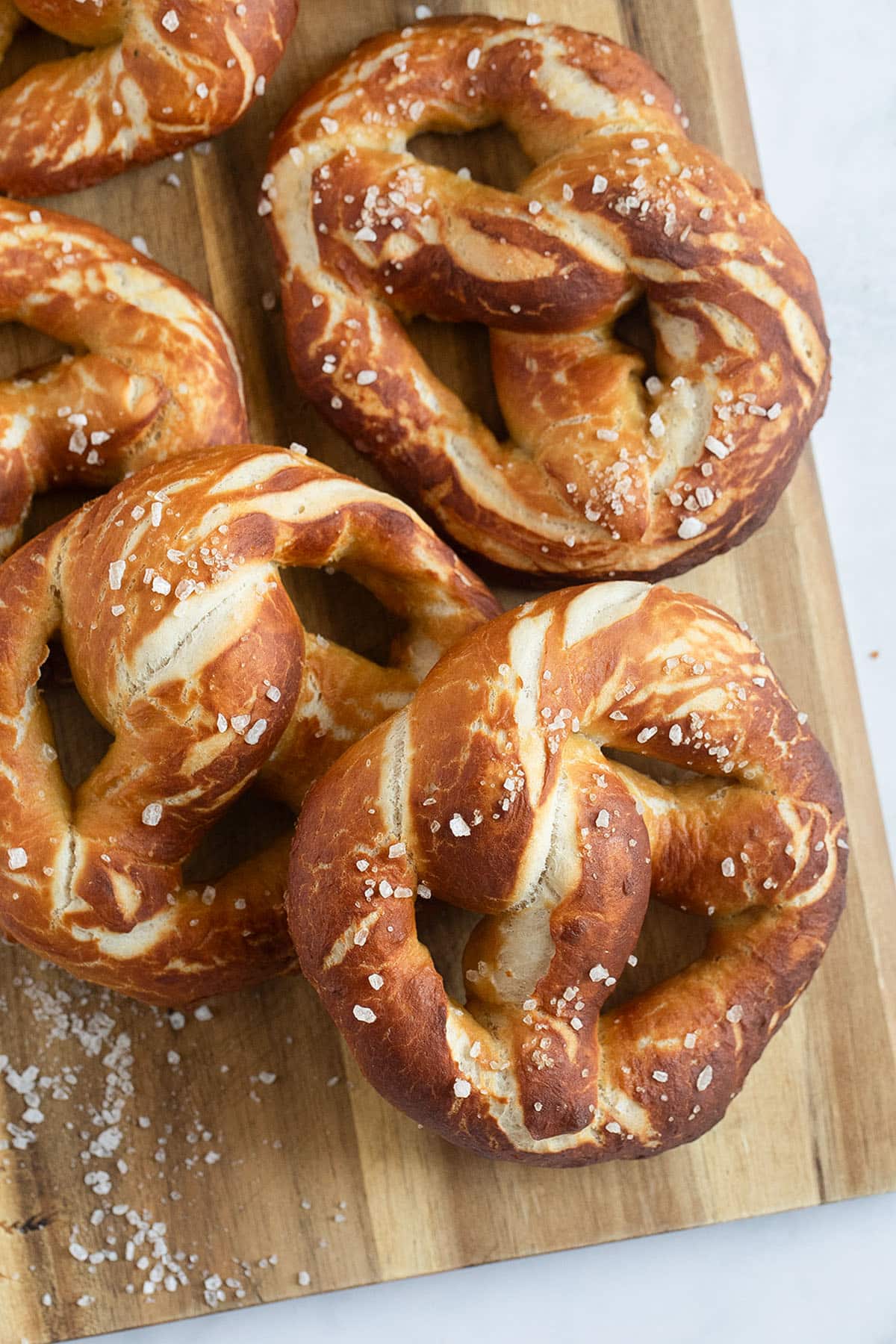
I make these German pretzels with a simple yeast dough. They're soft inside, a little chewy, and best while they're still warm or on the day you bake them. Before baking, I dip them in a baking soda bath to help them brown.
Pretzels from a German bakery are usually dipped in food-grade lye, which makes them darker and shinier. I didn't want you to have to buy lye just to make pretzels at home, so I use baking soda instead. Mine are not quite as shiny as the bakery ones, but they taste amazing (I like them even better), and you can make them with ingredients you probably already have.
For Oktoberfest, serve these pretzels with German Obatzda. And if you like, you can also try the Romanian Pretzels, which are very different from the German ones, but equally delicious.
Ingredients: 6 | Prep Time: 30 minutes | Rising & Resting: 1 hour | Cook Time: 30 minutes | Servings: 10 | Difficulty: Easy
Summarize & Save
Recipe ingredients
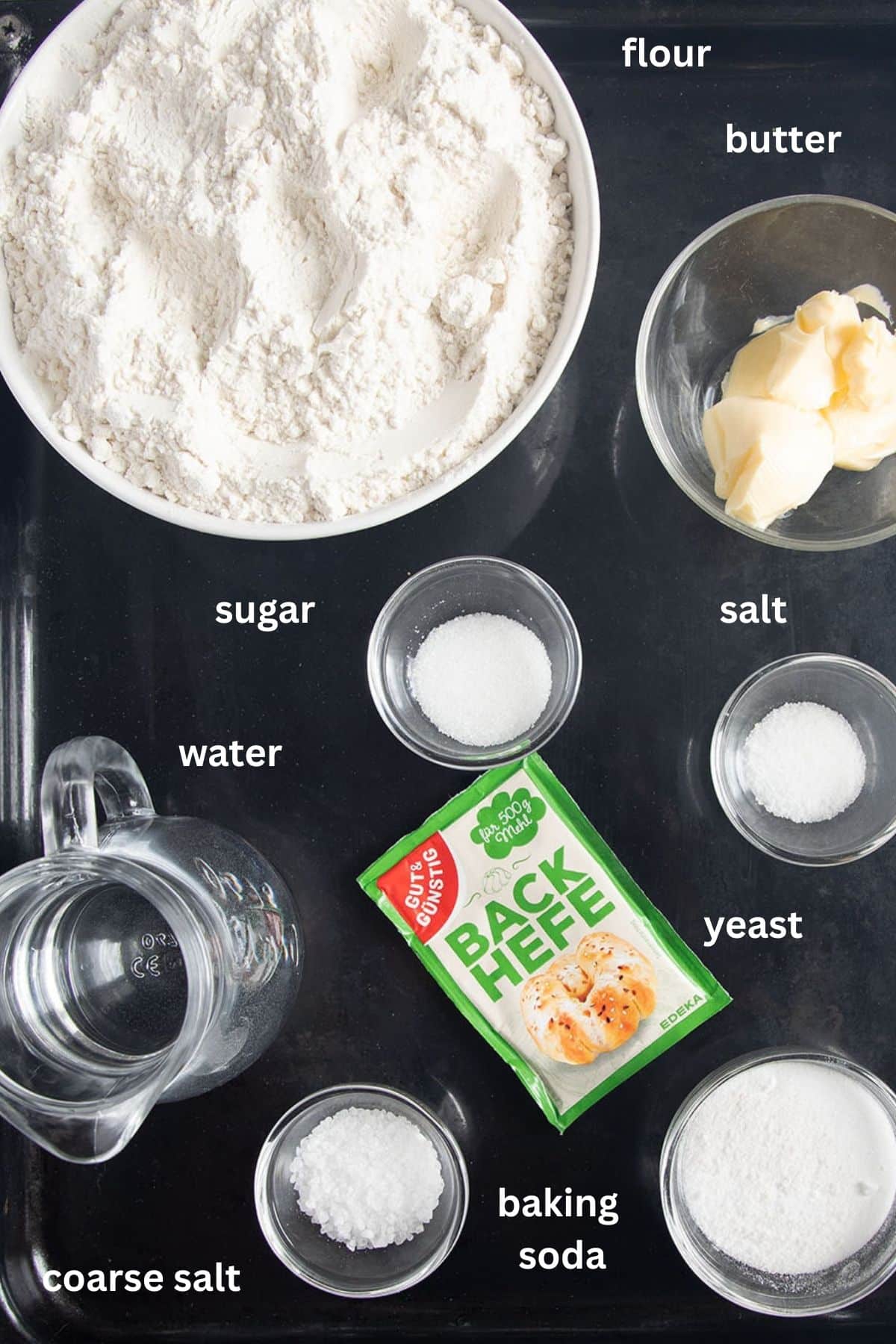
All-purpose flour: Start with 3¾ cups (450 g), and add the extra flour only if the dough stays very sticky after kneading. It should be soft, but you should be able to handle it.
Yeast: Use one 7 g packet of instant dry yeast. You can also use ½ cube fresh yeast (21 g / ¾ oz). Crumble the fresh yeast into the lukewarm water and stir until dissolved before adding it to the flour. Check the dough after 25-30 minutes, as it may double sooner than it does with instant yeast.
Salt: Use 1¼ teaspoons (8 g) fine sea salt in the dough. The coarse salt is for sprinkling on the shaped pretzels. If you can find it, you can use pretzel salt, which, compared with regular coarse salt, is opaque.
Baking soda: This goes into the water for dipping the pretzels before baking. It helps them brown, although they won't be quite as dark or shiny as pretzels made with food-grade lye. Try the Pretzel Pigs in a Blanket, too.
See the recipe card for full information on ingredients and quantities.
How to make German pretzels
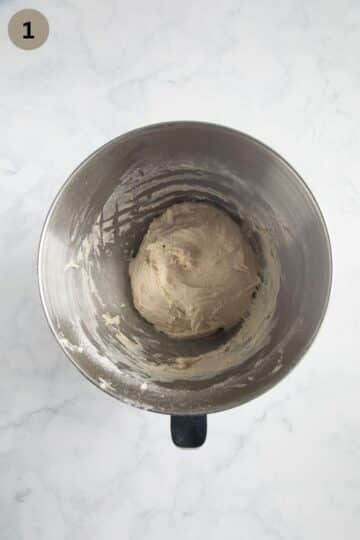
Step #1: Mix the flour, sugar, salt, and yeast in the stand mixer bowl. Add the butter and lukewarm water and knead with the dough hook on speed 2 for 10 minutes. Add the extra flour only if the dough remains very sticky and doesn't pull away from the bowl.
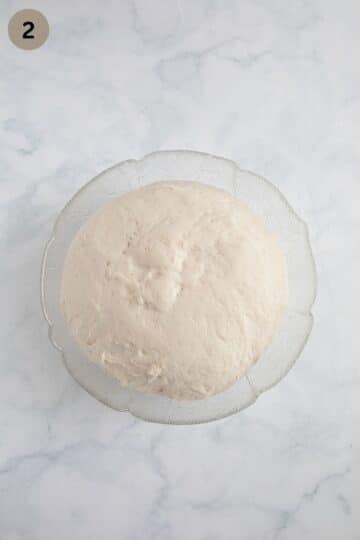
Step #2: Cover and leave in a warm place for 40-45 minutes or until doubled.
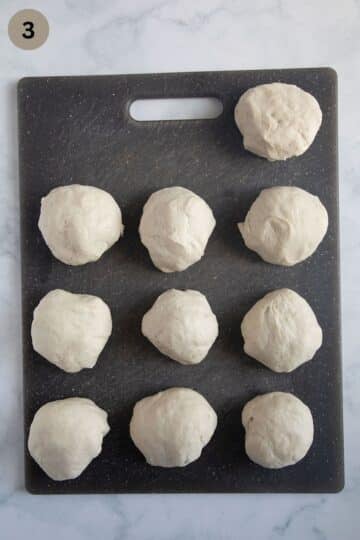
Step #3: Divide into 10 pieces, shape into balls, and rest under a kitchen towel for 15 minutes; this makes the dough easier to roll.
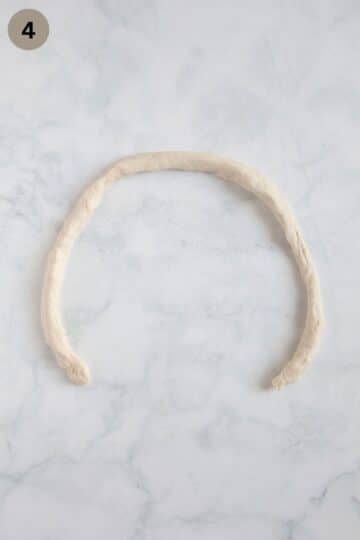
Step #4: Roll each ball into a rope about 24 inches (60 cm) long, keeping the middle thicker and the ends thinner. Bend the rope into a U.
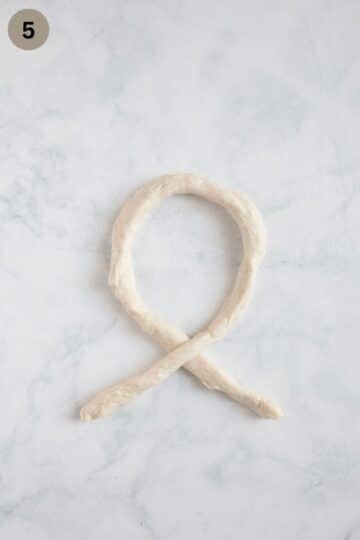
Step #5: Bring the two thin ends toward each other and cross them.
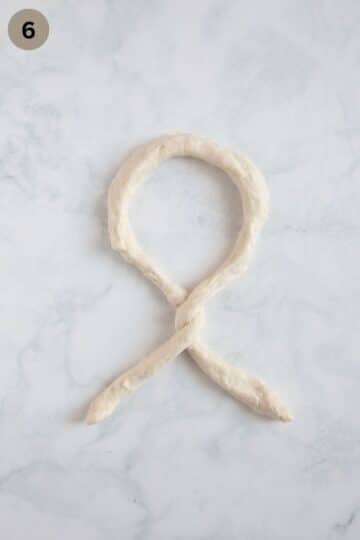
Step #6: Cross them once more to make a twist.
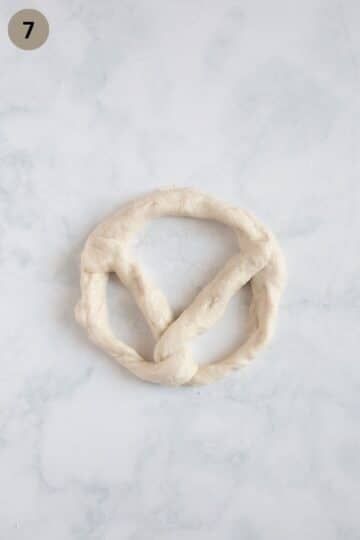
Step #7: Lift both ends toward the rounded, thicker part of the pretzel, place one end on each side, and press firmly to secure them.
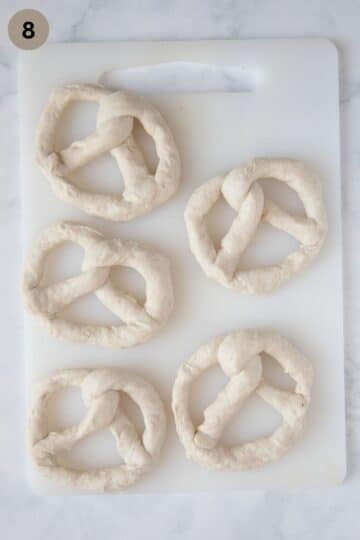
Step #8: Keep the shaped pretzels in the fridge while you prepare the baking soda bath. Preheat the oven.
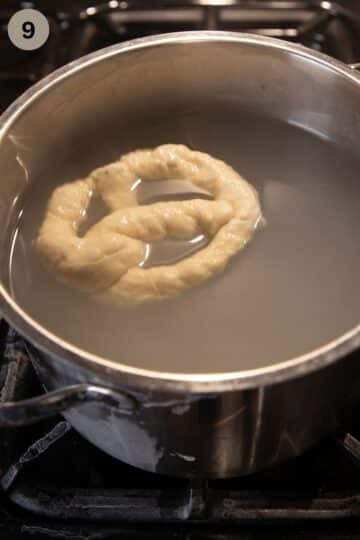
Step #9: Bring water to a boil and slowly add baking soda. Keep the bath at a gentle simmer and dip one or two pretzels at a time for 30 seconds.
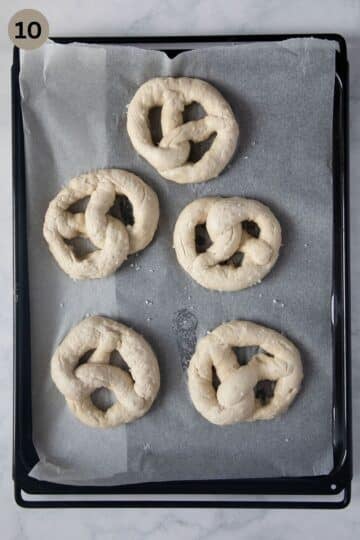
Step #10: Lift them out, let the water drain off, and place them on the baking sheet. Sprinkle with coarse salt and bake for 15 minutes until deeply browned.
Keep the second batch chilled until it's nearly time to bake it.
Tips
A digital kitchen scale gives the best results: Measuring the flour by weight is especially helpful for this dough. A packed cup can add more flour than you need, making the pretzels less soft.
Add the baking soda slowly: The water foams vigorously when you add it. Use a large pot and add a little at a time.
Dip just before baking: Leave the second batch in the fridge while the first bakes. Dip and salt it near the end of the baking time, so it can go into the oven soon afterward.
Storage
Pretzels taste best on the day you bake them.
Keep leftovers in an airtight container at room temperature for up to 2 days and warm them briefly in the oven before serving.
You can also freeze the baked pretzels once they've cooled completely. Reheat them from frozen in the oven until warmed through.
How to serve them
We usually eat the pretzels warm, with butter. They're also very good with Camembert spread or Spicy Peri Peri Dip. If you have a pretzel or two left the next day, you can turn them into Pretzel Chips.
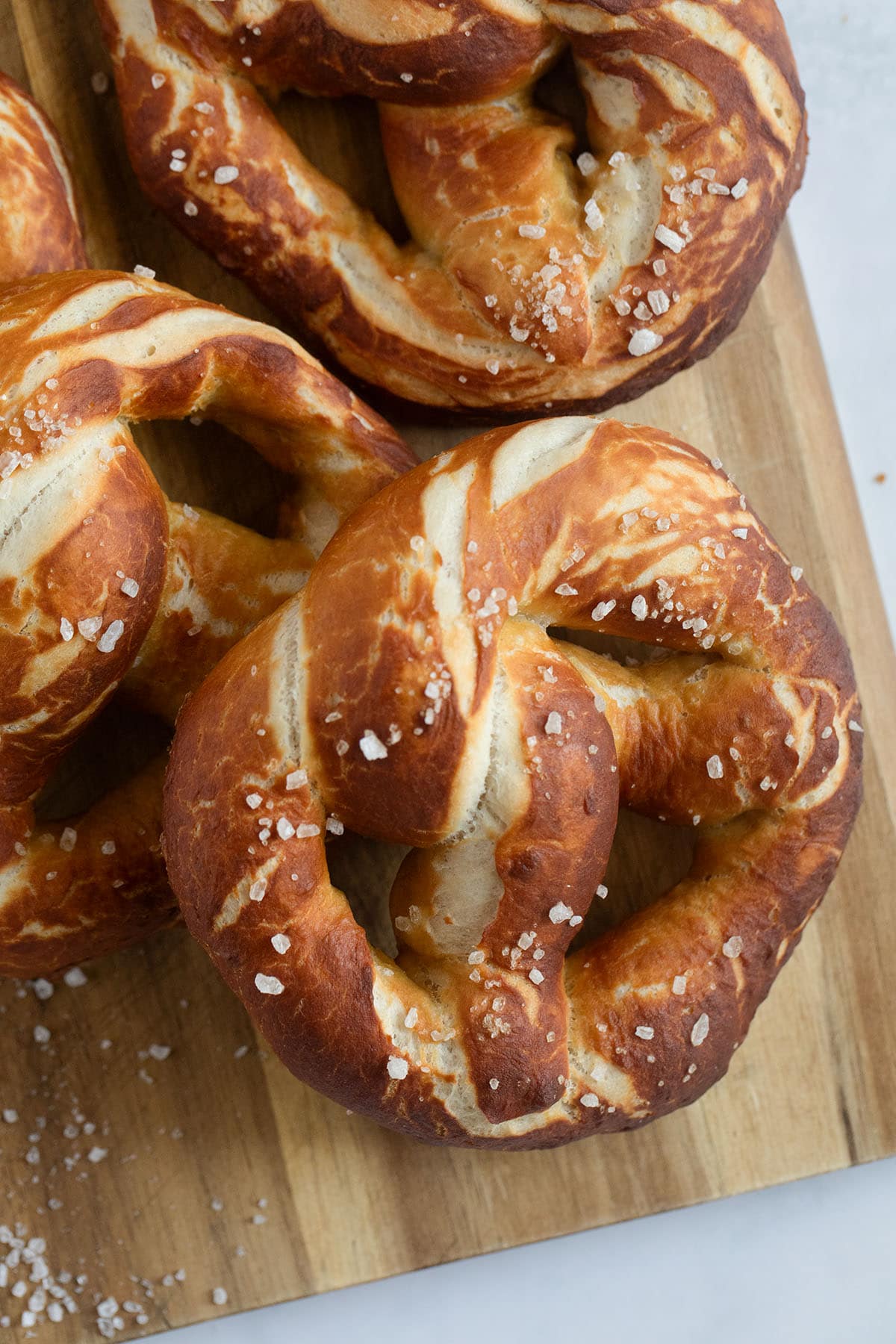




German Pretzel Recipe (Soft Bavarian Pretzels)
Equipment
- Stand mixer Note 1
- Large pot
- 2 Cutting boards
- 2 Baking sheets
- Slotted spoon
Ingredients
Pretzels:
- 3¾ cups all-purpose flour + about 3 tablespoons/25 g, a bit more if needed, Note 2
- 2 teaspoons granulated sugar
- 1¼ teaspoons fine sea salt Note 3
- 1 packet instant dry yeast Note 4
- 3½ tablespoons softened butter
- 1 cup + 1 tablespoon lukewarm water
Baking soda bath and topping:
- 8½ cups water
- 5½ tablespoons baking soda
- about 1 tablespoon coarse sea salt for sprinkling
Instructions
- Mix the dough: Combine the flour, sugar, salt, and instant yeast in the bowl of a stand mixer. Add the softened butter and lukewarm water.3¾ cups all-purpose flour + 2 teaspoons granulated sugar + 1¼ teaspoons fine sea salt + 1 packet instant dry yeast; 3½ tablespoons softened butter + 1 cup + 1 tablespoon lukewarm water
- Knead the dough: Knead with the dough hook on speed 2 for 10 minutes. If the dough is very sticky and does not pull away from the sides of the bowl, add the extra flour and knead until incorporated. The dough should still feel soft, so add only as much flour as needed.
- Let it rise: Shape the dough into a ball and place it in a clean bowl. Cover with a kitchen towel and leave in a warm place for 40-45 minutes, or until doubled in size (Note 4).
- Divide and rest: Weigh the dough and divide it into 10 equal pieces (mine weighed about 2¾ oz/ 78 g each). Shape each piece into a ball, place them on cutting boards, cover with a kitchen towel, and let them rest for 15 minutes.
- Preheat the oven to 425°F/220°C. Line two baking sheets with parchment paper.
- Shape the pretzels: Roll one dough ball into a rope about 24 inches (60 cm) long. Keep the middle thicker and roll the ends thinner. Bend the rope into a U shape, with the ends pointing toward you. Cross the thin ends over each other, twist them once more, then fold them up toward the thick middle of the U. Press each end gently onto the dough so it stays in place. Repeat with the remaining dough (See the images in the post).
- Chill the pretzels: Place the shaped pretzels on cutting boards that fit in your refrigerator. Refrigerate them while you prepare the baking soda bath.
- Make the baking soda bath: Bring the water to a boil in a large pot, then reduce the heat to medium. Add the baking soda slowly, a little at a time. It will foam up, so wait for the foam to subside before adding more.8½ cups water + 5½ tablespoons baking soda
- Dip the first batch: Keep the baking soda bath at a gentle simmer. Take five pretzels out of the refrigerator. Lower one or two at a time into the bath and leave them in for 30 seconds. Lift them out with a slotted spoon, let the excess water drain off, and place them on a prepared baking sheet.
- Bake the first batch: Sprinkle the pretzels with coarse salt. Bake for about 15 minutes, until deeply browned.about 1 tablespoon coarse sea salt
- Bake the second batch: Dip and salt the remaining pretzels near the end of the first baking time, then put them straight into the oven. Bake them for 15 minutes, until deeply browned. Serve the pretzels warm or at room temperature.
Notes
- Kneading without a stand mixer: Mix the ingredients in a large bowl until a dough forms, then knead it by hand on a lightly floured surface for about 12-15 minutes, until smooth and elastic.
- Measurements: I recommend using a digital kitchen scale to measure the ingredients.
- Salt: Use fine sea salt for the dough. If you have a scale, use 8 g; otherwise, measure 1¼ teaspoons. Coarse salt is only for sprinkling on the pretzels before baking. You can also use pretzel salt if you can find it.
- Yeast: You can replace the packet of instant dry yeast with ½ cube fresh yeast (21 g / ¾ oz). Crumble it into the lukewarm water and stir to dissolve before adding it to the flour. The dough may rise faster with fresh yeast, so check it after 25-30 minutes. It's ready when it has doubled in size.





Leave a Reply