
This wild garlic paste is made with fresh leaves, salt, and oil. The easiest way to preserve wild garlic and use it later in soups, sauces, eggs, and more.
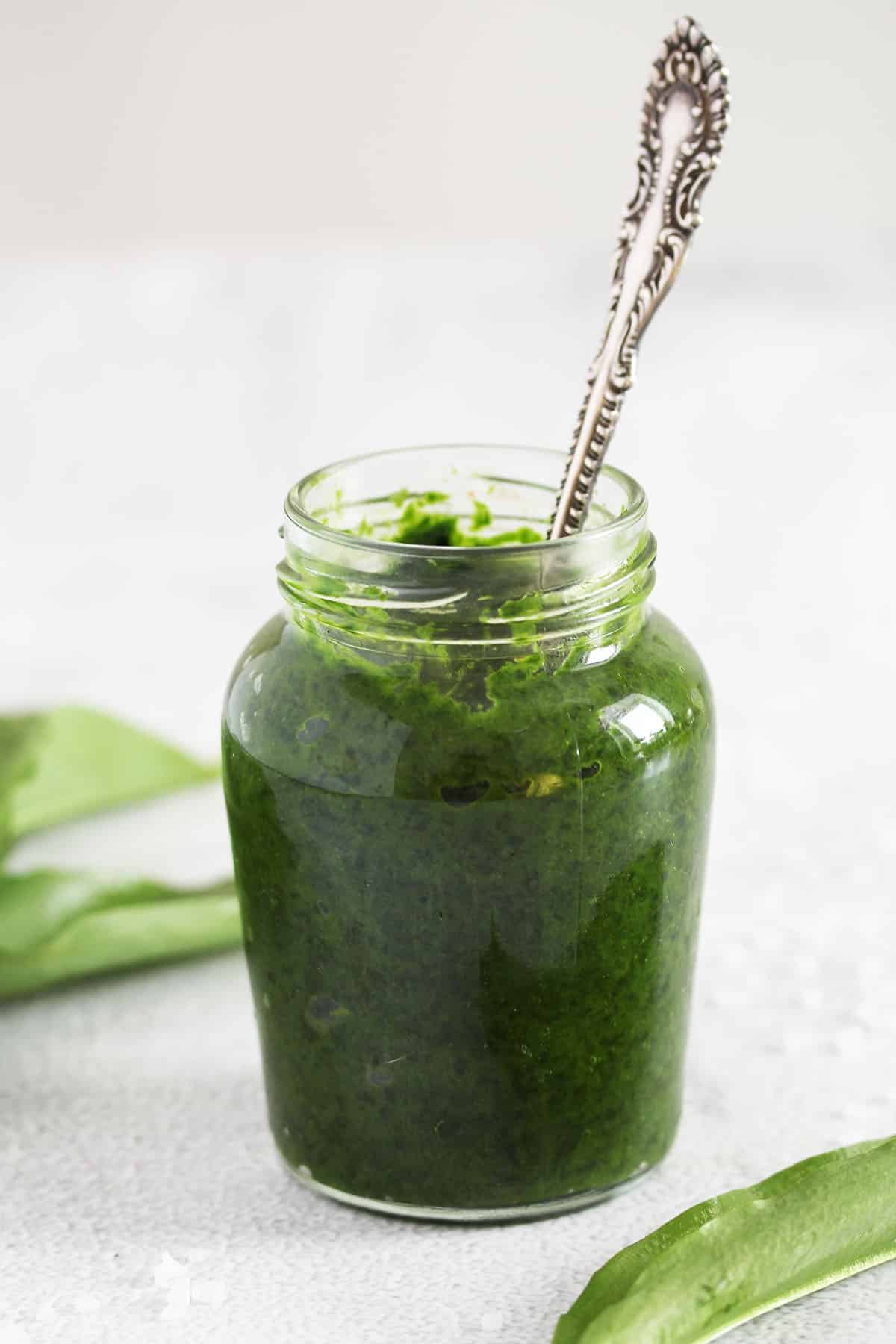
Wild garlic paste is the easiest way I preserve wild garlic every spring. As soon as I come home with a large bag of leaves, this is one of the first things I make.
It's a simple mixture of wild garlic, salt, and oil that keeps for months and is very easy to use in everyday cooking. I add it to soups, sauces, eggs, or spread it on bread.
If you want more ideas on how to use it, have a look at my guide on What to Do with Wild Garlic. You can also make a batch of Wild Garlic Pesto or try this Wild Garlic Pasta.
Ingredients: 3 | Prep Time: 10 minutes | Cook Time: 10 minutes | Servings: 2 cups | Difficulty: Easy
Jump to recipe
Recipe ingredients
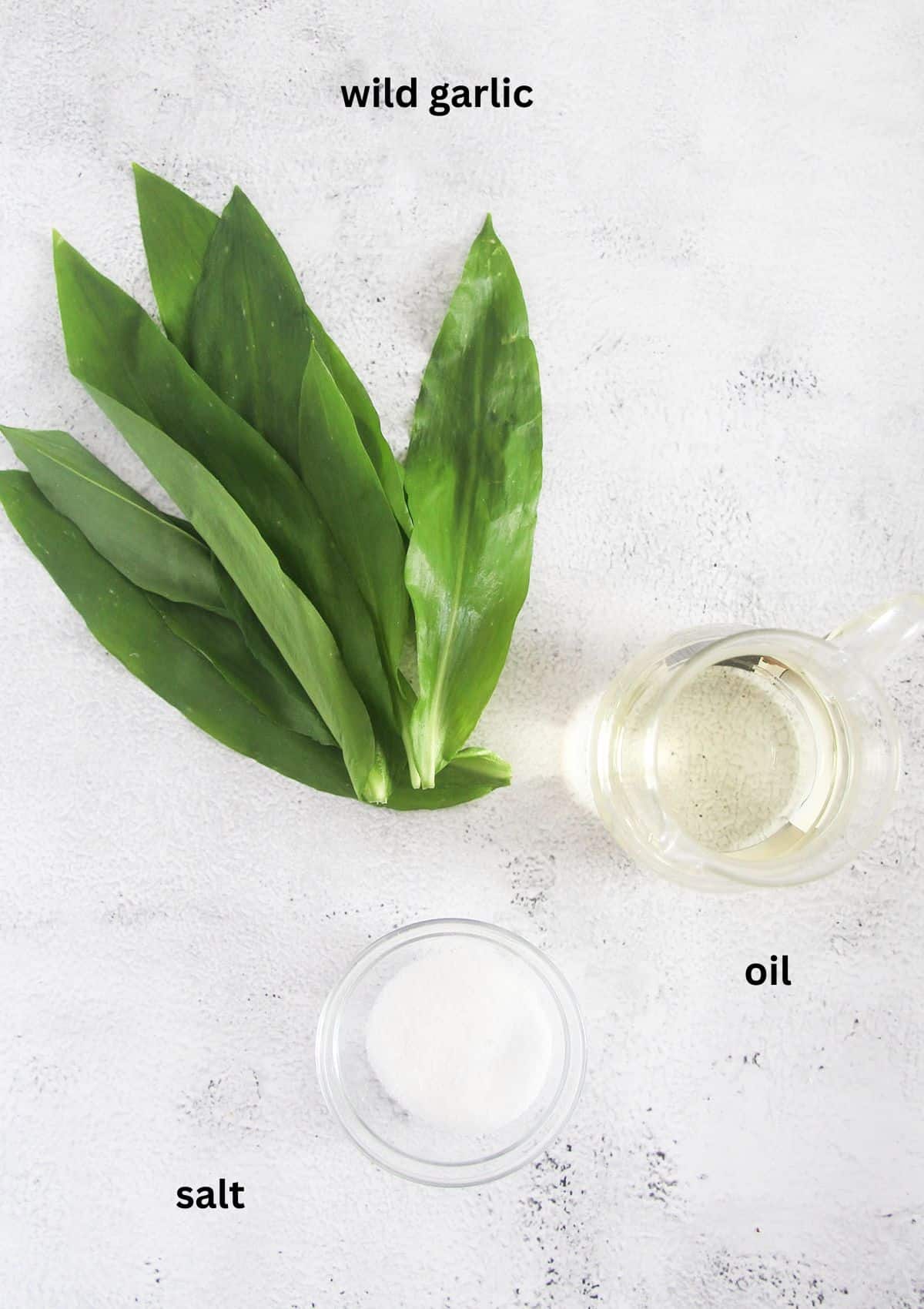
Wild garlic: Freshly picked, very clean leaves. The amount of ramsons you use is up to you; it depends on how much you picked or bought. Do a bit of math and adjust the needed salt and oil accordingly.
As always, when foraging, be 100% sure that you are picking the right plant and that what you pick is safe to eat.
Salt: I use fine sea salt. It is important to use as much salt as indicated because it is the salt that preserves the plant.
Oil: I use a neutral-tasting oil like canola or mild sunflower oil. I would not use olive oil for this recipe, but if you do, choose a very mild sort as well.
How to preserve wild garlic?
Step #1: Clean the leaves thoroughly. I clean the leaves one at a time, under rather hot running water. Dry them well.
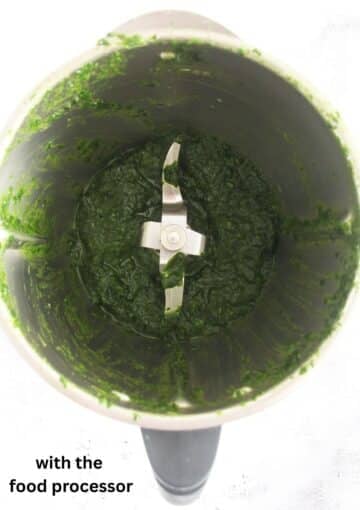
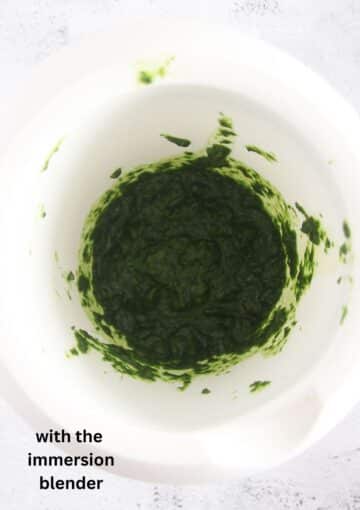
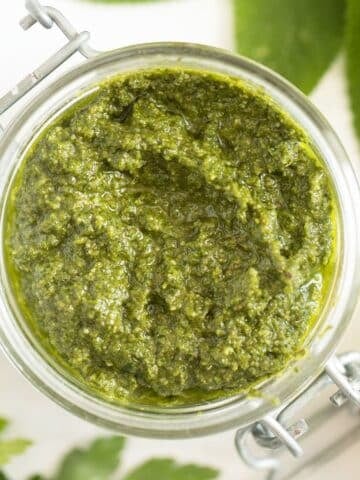
Step #2: Chop them roughly; the food processor will deal with them better if they are pre-chopped. Place them in a food processor and pulse until finely chopped. Add salt and oil and process until fairly smooth.
You can also use an immersion blender to make the wild garlic paste.
Tip
If you make a small amount, it's easier to use an immersion blender or a small processor. Larger machines work better with larger quantities.
My large food processor (a Thermomix) is better with larger amounts. If I use it for small quantities, all I do is scrape its walls every 20 seconds or so. I use it because I usually make twice the amount of paste.
How to use the paste?
The paste is very salty, so be careful when adding extra salt to a dish. You can also reduce or skip any fresh garlic in the recipe. You can use this Parsley Paste in a similar way.
- You can add some of the paste to soups, stews, sauces, or goulash - in fact, to most dishes.
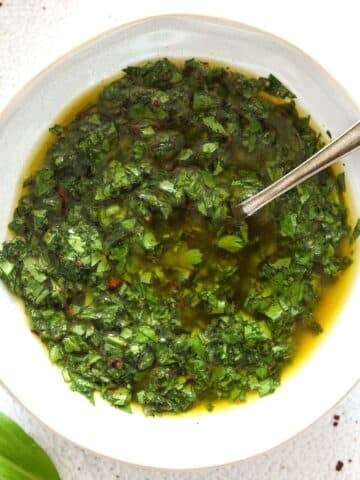
- Use for making salad dressings, either with oil and vinegar or with yogurt.
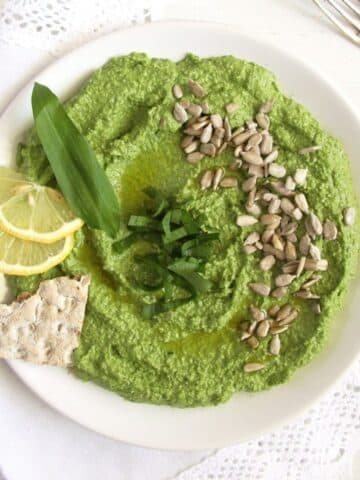
- Make a quick pesto for pasta. Mix some paste with freshly grated parmesan, pine nuts (or sunflower seeds, almonds), and blend well. Add olive oil to reach the desired consistency.
- For another quick pasta sauce, mix the paste with some heavy cream.
- Mix with cream cheese and serve with pasta or over baked potatoes.
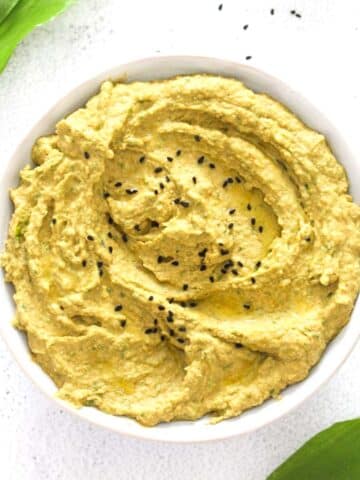
- Make bread spreads or dips. Mix with cream cheese, sour cream, or other milk products.
- Mix with soft butter to get the most delicious compound butter. Use to taste. As the paste is garlicky, salty, and herby, you will not need any other ingredients.
- Add to mashed potatoes or cooked rice for a quick, flavorful side dish.
- Use to marinate meat. Mix it with a little more oil to make it runnier, and rub the meat with the mixture.
- Mix with eggs to make scrambled eggs or omelets.
How to store?
Refrigerate: The wild garlic paste keeps very well in the fridge for at least 6 months. Once you've opened a jar, keep the rim clean and try to use it within 4 weeks.
Freeze for longer storage - at least 1 year. I found a jar that's been frozen for 3 years; the paste was still good.
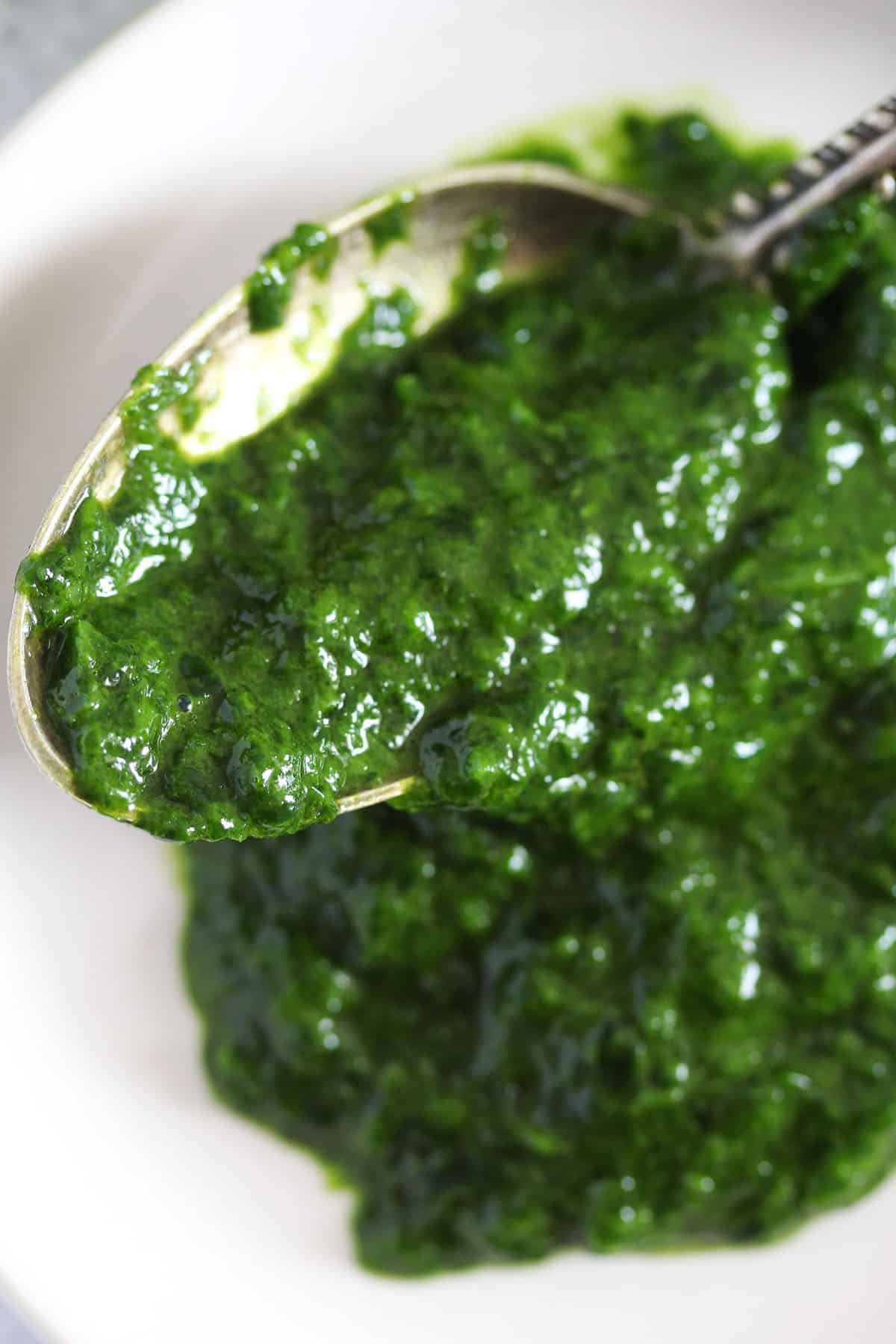
Wild Garlic Paste
Equipment
- Food processor
Ingredients
- 9 oz wild garlic Notes 1, 2
- 5 teaspoons fine sea salt
- scant 1 cup vegetable oil Note 2
Instructions
- Clean the leaves thoroughly, one at a time, under rather hot running water. Dry them well. Chop them roughly.9 oz wild garlic
- Blend with the salt and oil until rather smooth, scraping the walls of the food processor if necessary.5 teaspoons fine sea salt + scant 1 cup vegetable oil
- Transfer to small jars.
Notes
- The nutrition is calculated for 1 cup of the paste.
- Amounts: If you only make a small amount, it is preferable to blend the mixture with an immersion blender. For larger quantities, use the food processor. Experience has taught me that large food processors don't manage small amounts of ingredients very well.
- Oil: I used mild sunflower oil or canola oil.

Alison says
Spent yesterday afternoon collecting wild garlic leave and last night following your preservation recipe. Turns out to be actually inedible due to the massive salt content. Sad waste of time and oil.
Adina says
It is meant to be this way, I am sure I mentioned it. It is a condiment that is meant to be used sparingly like salt with garlic flavour, I use it instead of salt in most recipes. I hope you didn't throw it away. Salt is what preserveds it, if you used less you could not keep it for long, no preserving. Did you read the part about how to use it? It should be added to other dishes like soup, dressings, compound butter, etc. And then you should use less salt or no salt at all in that recipe. Try it, it is really good.
Toneee says
Great tips!